
Key Takeaways
- Regular overhead crane inspections help you identify wear, damage, and operating problems before they contribute to equipment failure or unplanned downtime.
- Your inspection schedule should account for crane usage, service conditions, equipment age, operating environment, and applicable overhead crane inspection requirements.
- Daily, frequent, and periodic inspections serve different purposes. A complete crane inspection program uses all three at the appropriate intervals.
- OSHA 1910.179, ASME B30 standards, and CMAA crane standards provide guidance that facilities can use when developing inspection and maintenance practices.
- Your overhead crane inspection checklist should cover structural, mechanical, electrical, operational, and safety-related components.
- Inspection findings become more useful when you connect them directly to preventive maintenance, repair planning, budgeting, and equipment history.
- A qualified inspection partner can give you an objective assessment, clear documentation, and practical repair recommendations.
If you manage a facility with overhead lifting equipment, you already know how much weight (literally and figuratively) rides on your crane fleet staying operational. What you might not fully appreciate is how much risk accumulates when overhead crane inspections slip down the priority list.
Whether it’s a worn wire rope, a sticking limit switch, or a hairline crack in a bridge girder, it rarely announces itself. It sits quietly until the day it doesn’t, and by then you’re dealing with a costly and challenging workplace incident.
This could mean OSHA citations running into tens of thousands of dollars, workers’ compensation claims, equipment replacement costs, or worse. Unplanned downtime on a production-critical industrial crane can cost more in lost output over a single week than years of proper inspection would have cost combined. None of that accounts for the human cost, which is the reason overhead crane inspection requirements exist in the first place.
This guide explains inspection types, key standards, common failures, and practical steps for managing an industrial crane program across your busy facilities.
Overhead Crane Inspection Fundamentals
An overhead crane inspection is a systematic evaluation of a crane and its components. The purpose is to identify conditions that may affect safe or reliable operation. It’s different from regular testing and maintenance.
Typically, it looks for wear, damage, deterioration, improper adjustment, and other deficiencies. Testing checks whether a component or system operates as expected, while maintenance involves servicing, adjusting, repairing, or replacing components. These three activities work together.
For example, a qualified crane inspector may find excessive brake wear during an inspection. Then, a functional test may show that the brake does not stop or hold the load as expected. Your maintenance crew can use those findings to determine what repair or adjustment is needed.
Which Types of Overhead Cranes Need Inspections?
Overhead cranes come in several configurations, and your inspection approach should account for the differences. For instance, bridge crane inspection covers the most common configuration, including a bridge spanning two runways, with a trolley and hoist traveling along it.
On the other hand, gantry crane inspection applies to similar equipment supported by legs running on floor-mounted rails rather than elevated runways, often used outdoors or in facilities without overhead runway structure.
Jib cranes, which pivot from a wall or floor-mounted column, and monorails, which run a single trolley along a fixed overhead track, each carry their own inspection nuances linked to their simpler but still safety-critical mechanisms.
Who Is Responsible for Crane Inspections?
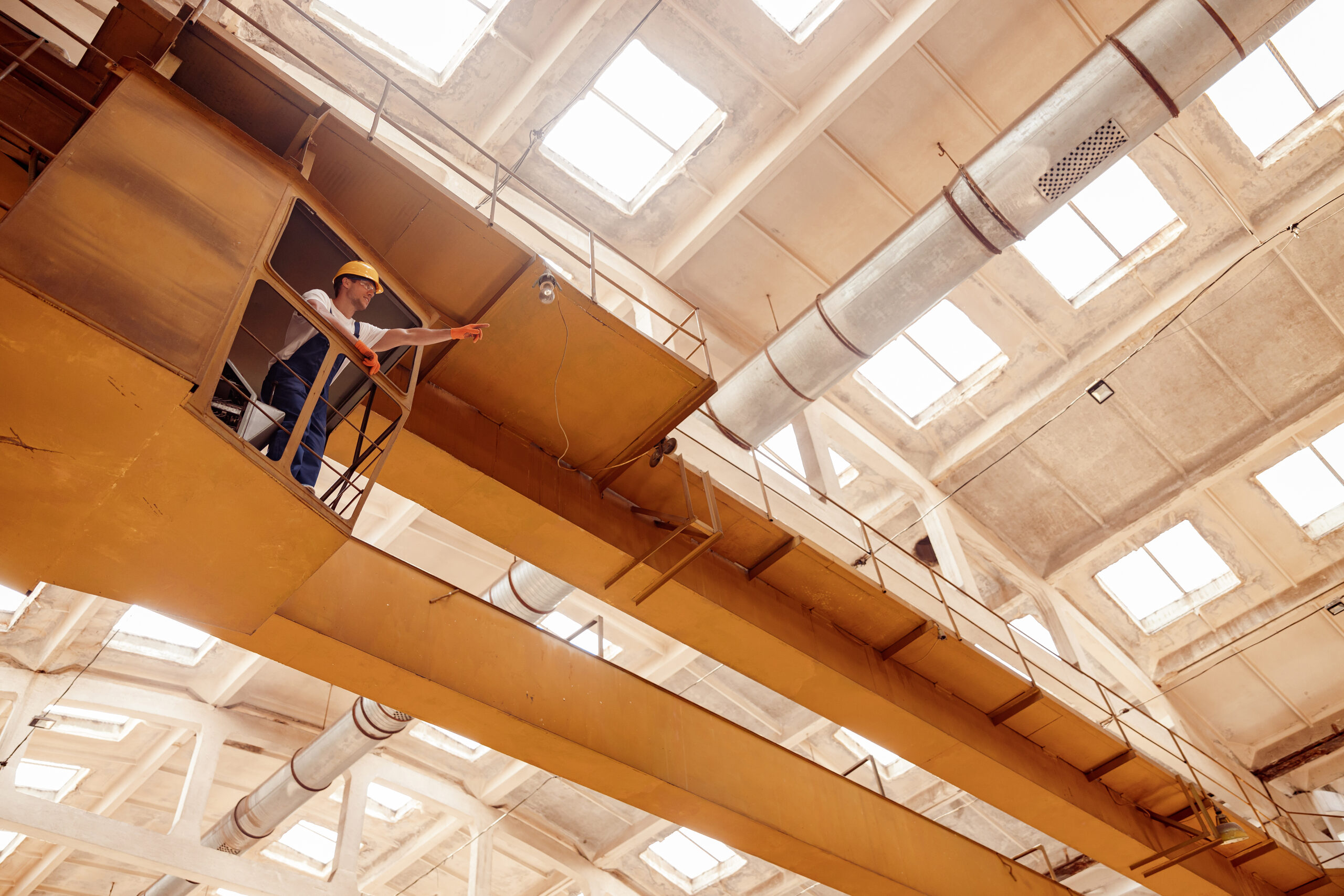
Responsibility for overhead crane inspection doesn’t rest with one person. It’s distributed across roles. Operators typically handle daily checks because they’re the ones running the equipment and best positioned to notice something off.
Designated personnel, usually maintenance staff trained specifically in inspection criteria, handle the more technical periodic and frequent inspections. However, you need a qualified crane inspector for the deeper structural and mechanical evaluations, particularly annual inspections and post-incident reviews.
Regulatory Framework: OSHA, ASME and CMAA Standards Facility Managers Need to Know
Overhead crane regulations are complex and covered by several different standards and regulatory authorities. Your inspection program should account for these complexities when planning a maintenance program.
OSHA 1910.179
OSHA 1910.179 addresses overhead and gantry cranes in general industry. The regulation covers areas such as crane construction, inspections, testing, maintenance, wire rope, handling loads, and operating practices.
OSHA crane inspection requirements provide an important regulatory foundation for developing inspection procedures in your facilities. OSHA divides inspections into categories that include frequent and periodic inspections. The required frequency depends partly on the component being evaluated and the crane’s service conditions.
ASME B30 Standards
ASME standards provide additional guidance for overhead lifting equipment. The ASME B30.2 applies to overhead and gantry cranes with top-running bridges and trolleys. You may need to adhere to ASME B30.2 compliance when developing inspection, testing, maintenance, and operating procedures.
Another standard to consider is ASME B30.11, which addresses monorails and underhung cranes. These standards provide more detailed guidance that can help your team establish inspection intervals and evaluation procedures.
CMAA Specifications
The Crane Manufacturers Association of America publishes specifications that cover overhead crane design and related practices. CMAA Specification 70 addresses top-running bridge and gantry cranes with top-running trolley hoists, while CMAA Specification 74 addresses certain single-girder cranes using under-running trolley hoists. CMAA crane standards can provide additional technical guidance when your facility evaluates crane condition and maintenance needs.
Keep Your Cranes Compliant and Your Crew Safe.
Types of Overhead Crane Inspections: Frequency and Scope Explained
Keeping your equipment and crew safe means relying on more than one type of overhead crane inspection. Inspection frequency and type depend on use, load severity, environment, and age. Here’s how:
Pre-Shift (Daily) Inspections
The pre-shift overhead crane inspection is performed by the operator before use. The operator checks the hook, wire rope or chain, controls, limit switches, brakes, warning devices, and travel path. They also perform a no-load test of hoist, trolley, and bridge motion.
You should create a simple daily crane overhead inspection checklist for the operators. OSHA does not require written daily records for every item, but written logs create a trail. If an operator reports the same unusual noise several times, for example, that data helps your maintenance crew identify the potential problem before it becomes costly.
Frequent Inspections (Monthly or Based on Usage)
Frequent overhead crane inspection covers more ground than the daily check. It generally covers controls, limit switches, hooks, wire rope, chain, brakes, and operating parts. The interval can range from daily to monthly based on service severity and component requirements. In dusty, corrosive or high-cycle areas, the interval should be shorter.
The person performing frequent overhead crane inspection needs to be trained to recognize hazards and understand the inspection criteria, though formal third-party certification isn’t a requirement at this level.
Any safety hazard identified must be reported immediately. While verbal reporting satisfies the urgent need, written reports are best practice because they show what was found, who reviewed it, and what repair followed.
Periodic Inspections (Annual or More Frequently)
The annual overhead crane inspection calls for a comprehensive evaluation of the entire crane system. It covers structure, electrical parts, mechanical parts, brakes, wheels, rails, gear cases, bearings, connections, and safety devices.
Most facilities treat this as the annual inspection, but severe service, such as corrosive environments, extreme temperatures, aging equipment, or heavy-cycle applications, may require quarterly or semiannual reviews.
Annual overhead crane inspections usually require more skill and detail than operator checks. So, many facilities use a third-party qualified overhead crane inspector for added objectivity. The report should list defects, reference standards, assign severity, and state whether the crane can stay in service.
Post-Incident and Return-to-Service Inspections
Post-event and return-to-service checks are required after an accident, near miss, long shutdown, relocation, major repair, or change to the overhead crane. After structural repairs, load testing may be required to verify the overhead crane can safely handle rated capacity again. Plus, all completed work needs to be verified against manufacturer specifications before the equipment goes back into service.
Complete Overhead Crane Inspection Checklist: Component by Component
Your maintenance crew needs a practical overhead crane inspection checklist to avoid missing any key parts. It should examine the crane as a complete system.
Structural Components
- Bridge Girders and End Trucks: Check for deflection, cracking, or deformation that could signal overloading or accumulated metal fatigue.
- Runway Beams and Rails: Inspect for straightness, secure fastening, correct gauge, and wear patterns that could compromise safe operation.
- Support Columns and Connections: Verify columns are plumb, properly anchored, and free of damage at connection points.
- Welds and Bolted Connections: Examine critical welds for cracks or defects, and check bolted connections for proper torque and any missing fasteners.
- Signs of Fatigue, Cracks, or Deformation: Look specifically at high-stress areas for visible cracking, along with any permanent bending or twisting of structural members.
Mechanical Systems
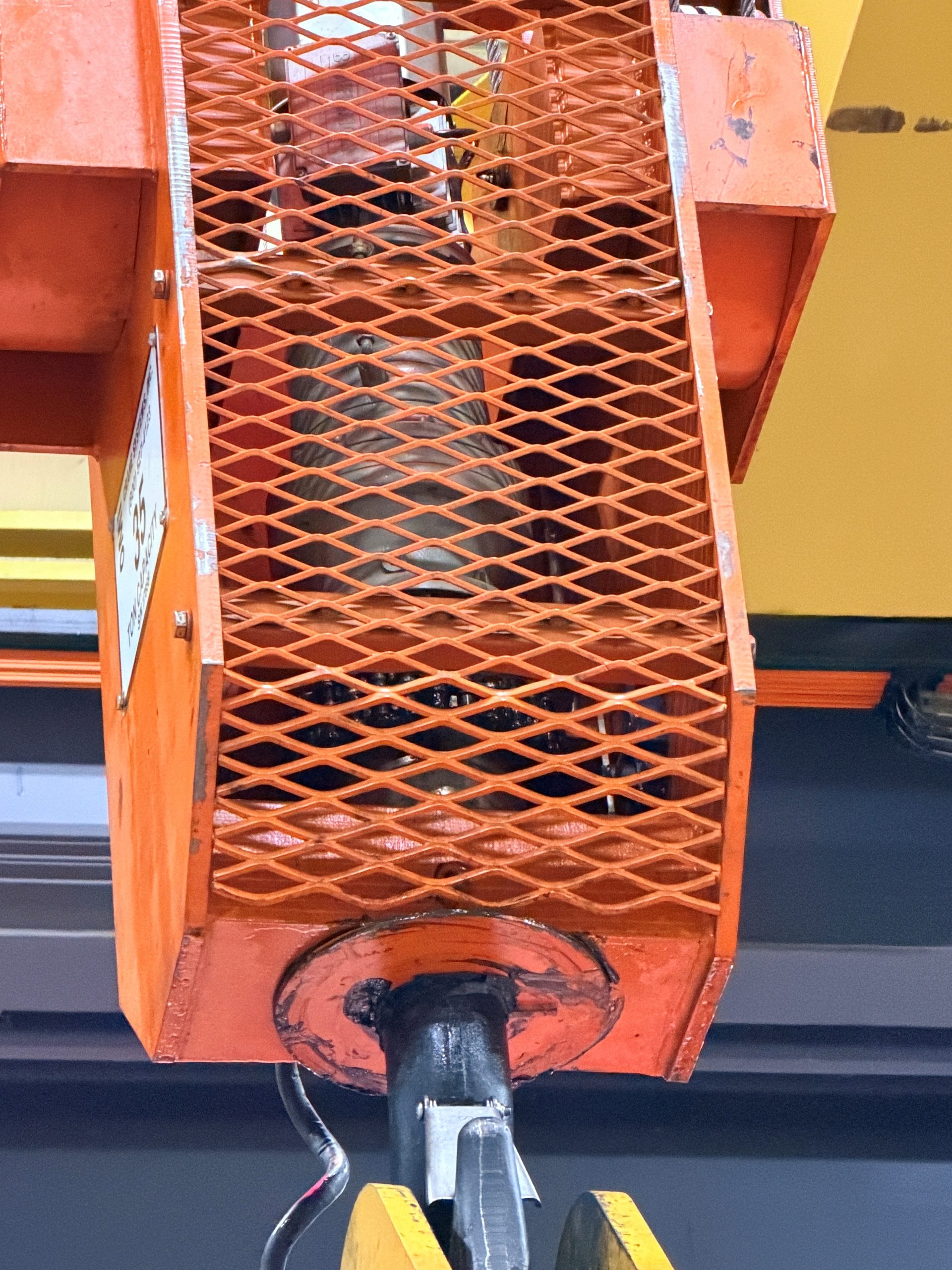
- Hoist Mechanism and Drum: Inspect the drum for proper rope spooling and wear, and confirm the hoist runs smoothly without unusual noise.
- Wire Rope or Chain Condition: Examine the full length for broken wires, corrosion, kinking, crushing, or stretch beyond acceptable limits. Crane wire rope inspection is one of the highest-value checks you can perform, since rope failure is catastrophic and often preventable.
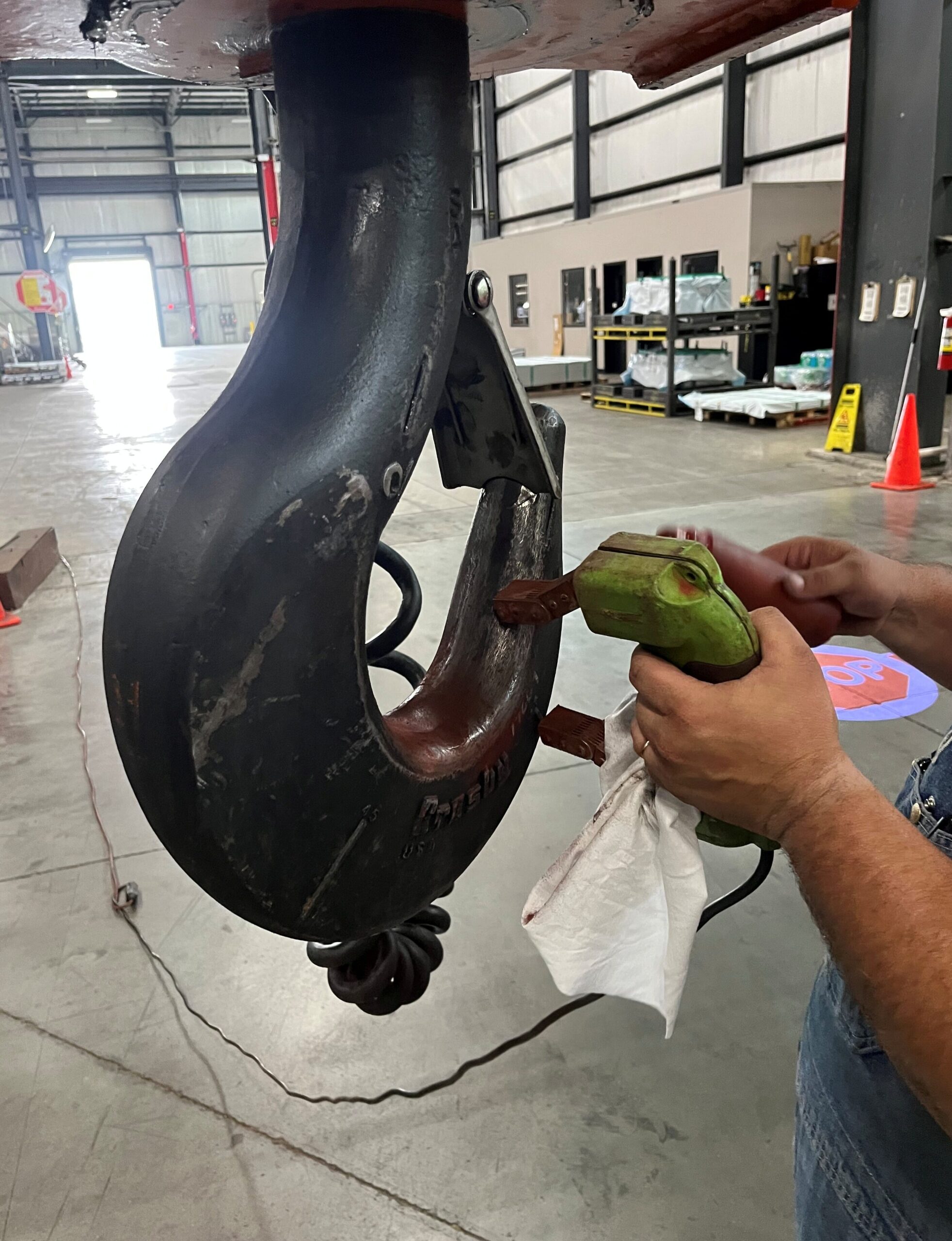
- Hooks: Crane hook inspection criteria are highly specific. You need to measure throat opening against manufacturer specifications and check for cracks or twist, with a 15% increase in throat opening generally requiring replacement.
- Sheaves and Pulleys: Inspect for groove wear, cracking, and proper alignment, since misalignment accelerates wire rope deterioration.
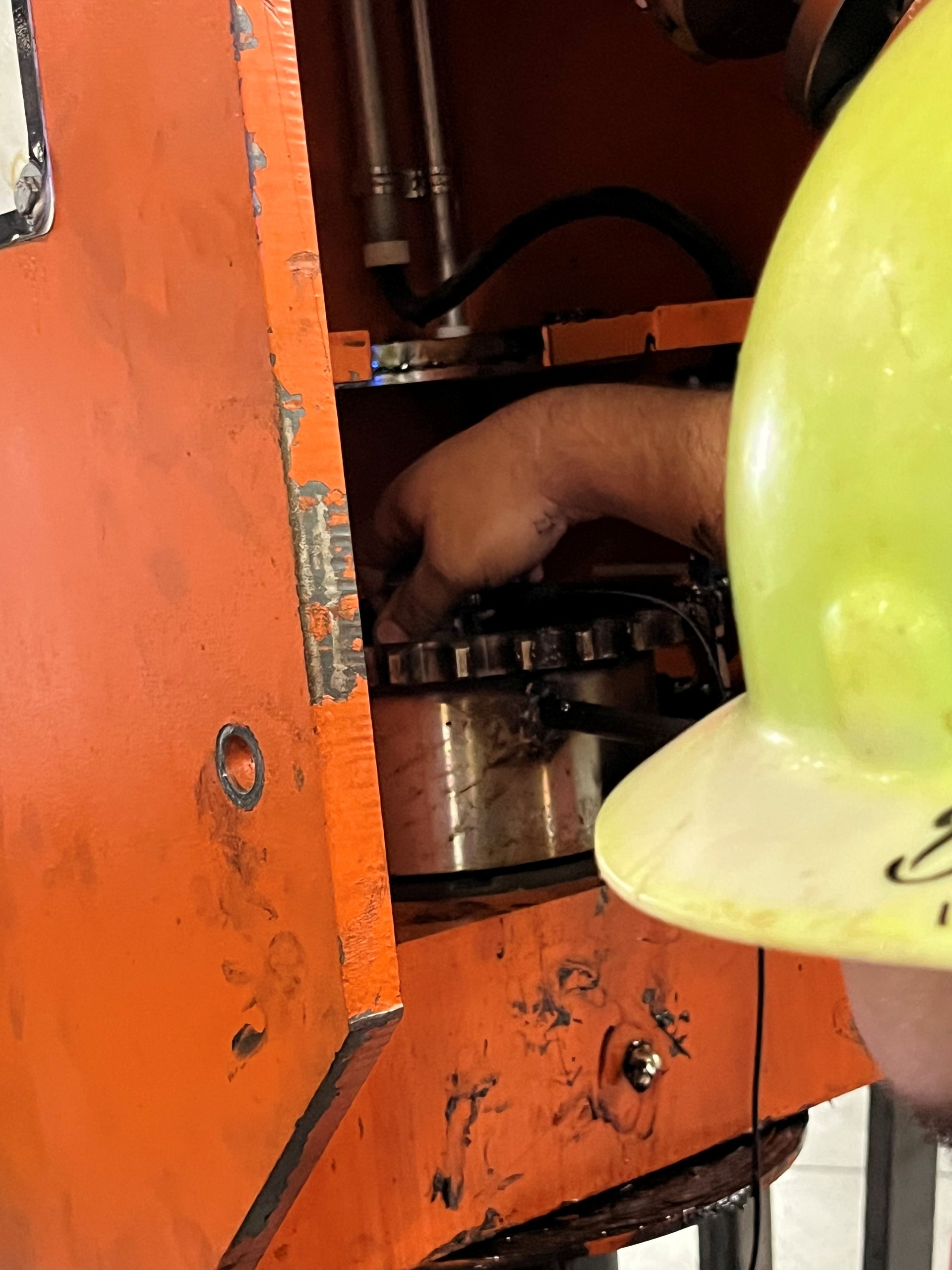
- Gearboxes and Bearings: Check oil levels, look for leaks, and listen for unusual noise that could indicate gear or bearing wear.
- Bridge and Trolley Wheels: Examine for flat spots, flange wear, and tread conditions that could cause improper tracking or derailment.
- Brakes: Overhead crane brake inspection covers both holding brakes (testing for load drift) and control brakes (verifying smooth, predictable deceleration).
Electrical Systems
- Control Panels and Switches: Inspect for signs of overheating, loose connections, and contamination from dust, oil, or moisture.
- Pendant Stations and Radio Controls: Check for damaged buttons, secure connections, and test radio controls across the full operating range.
- Festoon Systems or Conductor Bars: Examine cables for wear and proper support, and check conductor bars for alignment and clean contact surfaces.
- Motors and Contactors: Inspect motors for overheating or unusual vibration, and check contactors for pitted or burned contacts.
- Limit Switches: Test upper, lower, and travel limit switches to confirm they stop overhead crane motion at the correct points; these are critical safety devices with no margin for malfunction.
- Warning Devices and Alarms: Verify all warning lights, horns, and alarms function correctly to alert personnel of crane movement.
Safety Devices
- Overload Protection Systems: Test to confirm activation at the correct load threshold to prevent exceeding rated capacity.
- Anti-Collision Systems: Where multiple overhead cranes share a runway, verify the system provides adequate warning and halts motion before contact occurs.
- Emergency Stop Functions: Test every emergency stop button to confirm it immediately halts all crane motion when activated.
- Warning Labels and Load Charts: Verify labels are present and legible, and that load charts are visible, accurate, and protected from damage.
Operational Testing
- Crane Load Testing: Required after installation, following certain repairs, or when specified by applicable standards, to verify safe load-handling capacity.
- Functional Testing of All Motions: Test hoist, trolley, and bridge travel through their full range to confirm consistent speed and predictable response.
- Brake Testing Procedures: Test holding brakes with a rated load slightly elevated, and observe control brake stopping distance across various speeds.
Together, these categories cover the full range of overhead crane components that matter for safety and performance. But treat this checklist as a living document you customize to your specific fleet rather than a one-size-fits-all form.
Fast, Reliable Repairs When You Need Them Most.
Common Inspection Failures and How to Prevent Them
Knowing what typically goes wrong lets you inspect with intention rather than just working through a checklist mechanically. Your overhead crane inspection plan should cover the following failure points.
Wire Rope Deterioration
Wire rope deterioration includes broken wires, corrosion, kinks, bird-caging, crushing, and loss of diameter. Proper lubrication, smooth drum spooling and no shock loading help extend rope life. Your operators should report any rope change before the next use.
Hook Wear and Deformation
Hook wear usually comes from overload, side loading, or poor rigging. Measure throat opening on a set schedule and compare it with the original size. Replace hooks that exceed allowed limits, show cracks, or have damaged latches.
Brake Wear and Adjustment Issues
Brake issues show up as longer stop distance, load drift, or rough motion. Set inspection intervals based on use and manufacturer guidance. High-cycle hoists may need more frequent brake checks.
Electrical Component Degradation
Dust, oil and moisture can damage contacts, enclosures and controls. Keep panels clean, sealed and dry. Replace cracked pendants, worn cable jackets and pitted contacts before poor response becomes a hazard.
Structural Fatigue in High-Cycle Applications
High-cycle cranes need close review at welds, girder ends, end trucks and runway connections. Small cracks can grow with each load cycle. Any crack-like mark should be cleaned, inspected and tracked.
Environmental Factors: Corrosion, Contamination and Extreme Temperatures
Overhead crane corrosion can attack rails, bolts, hooks, rope and control boxes. Outdoor areas, washdown zones and humid production bays need closer review. Coatings, covers and better drainage can reduce damage.
Operator Misuse Patterns
Side loading, shock loading, dragging loads and poor rigging create early wear. Training should connect unsafe use with the exact parts it damages. Premature hook, rope, or brake wear can reveal training gaps.
Integrating Preventive Maintenance with Inspection Findings
Inspection results should feed into your preventive maintenance and repairs. Rank defects by risk, set response dates and close each item in writing. Trend repeat issues by crane, shift, area and component.
Building an Effective Crane Inspection Program for Your Facility
Moving to a genuine crane inspection program starts with an honest assessment of where you currently stand. Start by comparing current checks with OSHA and ASME guidance. Look for gaps in frequency, scope, records, training, and repair closeout.
Assessing Your Current Inspection Practices
Review daily logs, annual reports, repair history and open work orders. Check whether each overhead crane has a current rated capacity label, inspection record and service status. Gaps should become action items with owners and dates.
Assigning Clear Roles and Responsibilities
Define who performs pre-shift, frequent, periodic, and return-to-service checks. Each role should include authority to stop crane use when a hazard exists. This prevents unsafe equipment from staying in production.
Creating Inspection Schedules Based on Usage and Environment
Set schedules by use and environment, not calendar alone. A light-use jib crane may need less frequent deep review than a high-cycle bridge crane in a hot bay. Severe service calls for shorter intervals.
Assessing Your Current Inspection Practices
Review daily logs, annual reports, repair history and open work orders. Check whether each overhead crane has a current rated capacity label, inspection record and service status. Gaps should become action items with owners and dates.
Training Operators and Designated Personnel
Crane operator training should cover checklists, warning signs, rigging basics, load control, and reporting steps. Designated personnel need deeper training on wear limits, standards and records. Refresher sessions help keep practices consistent.
Selecting and Working with Qualified Third-Party Inspectors
Third-party inspectors can provide annual reviews, load tests and detailed findings. Ask about experience with your overhead crane types, reporting format, tools and standard references. Clear expectations reduce delays after the inspection.
Integrating Inspections into Your Overall Maintenance Program
Inspection findings should move into maintenance planning at once. Serious defects require lockout or removal from use. Lower-risk items still need tracked repair dates, parts plans, and status updates.
Using Inspection Data to Predict and Budget for Repairs
Good overhead crane management uses records to predict rope changes, brake service, wheel replacement and control upgrades. Trend data helps budget work before it becomes an urgent outage.
Technology Tools for Tracking and Managing Inspections
Software can help schedule checks, store photos, assign repairs, and track closure. Smaller sites can start with shared spreadsheets, but larger fleets benefit from digital overhead crane inspection records and reminders.
Choosing a Qualified Crane Inspection Partner
You should partner with a good crane inspection company to get clear findings, sound judgment and useful records. However, you should verify training, credentials, overhead crane experience, and report quality before booking work.
Certifications and Qualifications to Look For
A certified overhead crane inspector should hold relevant credentials from recognized organizations, but certifications alone are not enough. You must also ask how the inspectors stay current with OSHA, ASME, and CMAA standards.
Industry Experience and Specialization
Choose inspectors who know your equipment type and work processes. Hiring an inspector who regularly works for stamping plants might not work for a food processing plant. Work with an inspector who has dealt with clients in your industry, as they can read the signs faster.
Comprehensive Reporting and Recommendations
Quality reports list each defect, location, severity, standard reference, and corrective action. Photos help maintenance teams find the exact issue. Generic reports with little detail have limited value.
Responsiveness and Communication
Professional overhead crane inspection services include clear scheduling, proactive communication of serious hazards, and timely reports. Serious findings should be shared before the inspector leaves the site.
Post-Inspection Support and Follow-Up
The best inspection partners answer questions after the report. They can explain defect priority, retest needs, and repair options without pressuring a facility into rushed work.
Questions to Ask Potential Inspection Partners
Ask who will inspect the overhead crane, what standards they use, what tools they bring, how fast reports arrive, and how they report unsafe findings. Always ask for a sample report before work starts.
Red Flags to Watch Out For
Watch for vague reports, unclear credentials, no photos, limited standard references, or very low prices without a clear reason. Poor documentation can leave a facility exposed after a failure.
Conclusion: Make Overhead Crane Inspections Part of Your Maintenance Strategy
Overhead crane inspections aren’t a compliance formality. They’re what stands between normal operations and a preventable injury, a costly shutdown, or a six-figure liability claim. Every category outlined here, from daily operator checks to annual structural evaluations, exists because it catches a specific class of failure before it becomes an incident.
Take this guide and hold it up against what your facility is actually doing today. Where are the gaps in frequency, in documentation, in who’s authorized to pull a crane from service when something looks wrong? Closing those gaps now costs far less than discovering them after an incident forces the question.
If you’re ready to strengthen your overhead crane inspection program, Brennan Jacobs is here to help. We work with facility managers to build inspection programs that hold up to scrutiny and keep crane operations safe, compliant, and running. Reach out for a consultation, and let’s make sure your crane fleet is working efficiently and safely.
Quality Crane & Hoist Parts Ready to Ship.
Frequently Asked Questions About Overhead Crane Inspections
The right overhead crane inspection frequency depends on the inspection category and the service. Daily pre-shift checks by operators, frequent inspections ranging from daily to monthly based on service severity, and periodic (annual) inspections that may need to happen more often in harsh environments or high-cycle applications.
Operators can perform pre-shift checks when trained. Designated personnel can perform frequent inspections if they know the equipment and inspection criteria. However, periodic inspections should be performed by qualified personnel with deeper crane knowledge.
It should be removed from service until the defect is corrected. The repair should be recorded, and the overhead crane may need a return-to-service inspection or test before use.
Load tests are not required for every annual inspection. They may be required after new installation, major repair, structural work, or certain changes. Follow OSHA, ASME, and manufacturer guidance.
You should keep inspection records long enough to show current compliance, repair history, and trend data. Many facilities keep annual records for the life of the overhead crane and recent frequent records for active review.
Operators can perform daily pre-shift checks if trained. They should not perform structural evaluations unless they are designated and trained for that scope. Serious defects should go to maintenance or a qualified inspector.
OSHA rules are legal requirements, while ASME standards give detailed guidance on safe use, inspection scope, and frequency. Many facilities use both to answer common overhead crane inspection questions and set internal procedures.
Author:
Victor Crawford is the President and CFO of Brennan Jacobs Inc., a company he founded in 2010. He has 42 years of industrial machine maintenance experience, including 30 years focused on overhead cranes and hoists. Before starting his own company, he worked at Konecranes for many years, earning the title of Master Technician and later working as a salesman and Branch Manager, opening offices in Plant City, Miami, Jacksonville, Memphis, Little Rock, and Nashville. He holds a degree in Industrial Controls Engineering from Tampa Technical Institute and is a Journeyman Millwright.