
Key Takeaways
- Single girder overhead cranes suit lighter-duty applications, lower capacities, and cost- or space-conscious facilities.
- Double girder overhead cranes handle heavier loads, higher lifting capacities, longer spans, and demanding industrial work.
- Key selection factors include load capacity, span, lift height, and duty cycle.
- Additional considerations include available headroom, operating environment, and budget.
Overhead cranes support material handling across manufacturing, warehousing, construction, and industrial facilities. Selecting the right crane configuration affects your lifting capacity, productivity, available workspace, operating costs, and long-term performance.
Two of the most common types are the single girder and the double girder overhead cranes. Both handle the same basic job of lifting and moving loads, but their designs and capabilities are different. In this guide, we’ll walk you through the key differences, show you where each one fits best, and help you figure out which option may be right for your application.
What Is a Double Girder Crane?
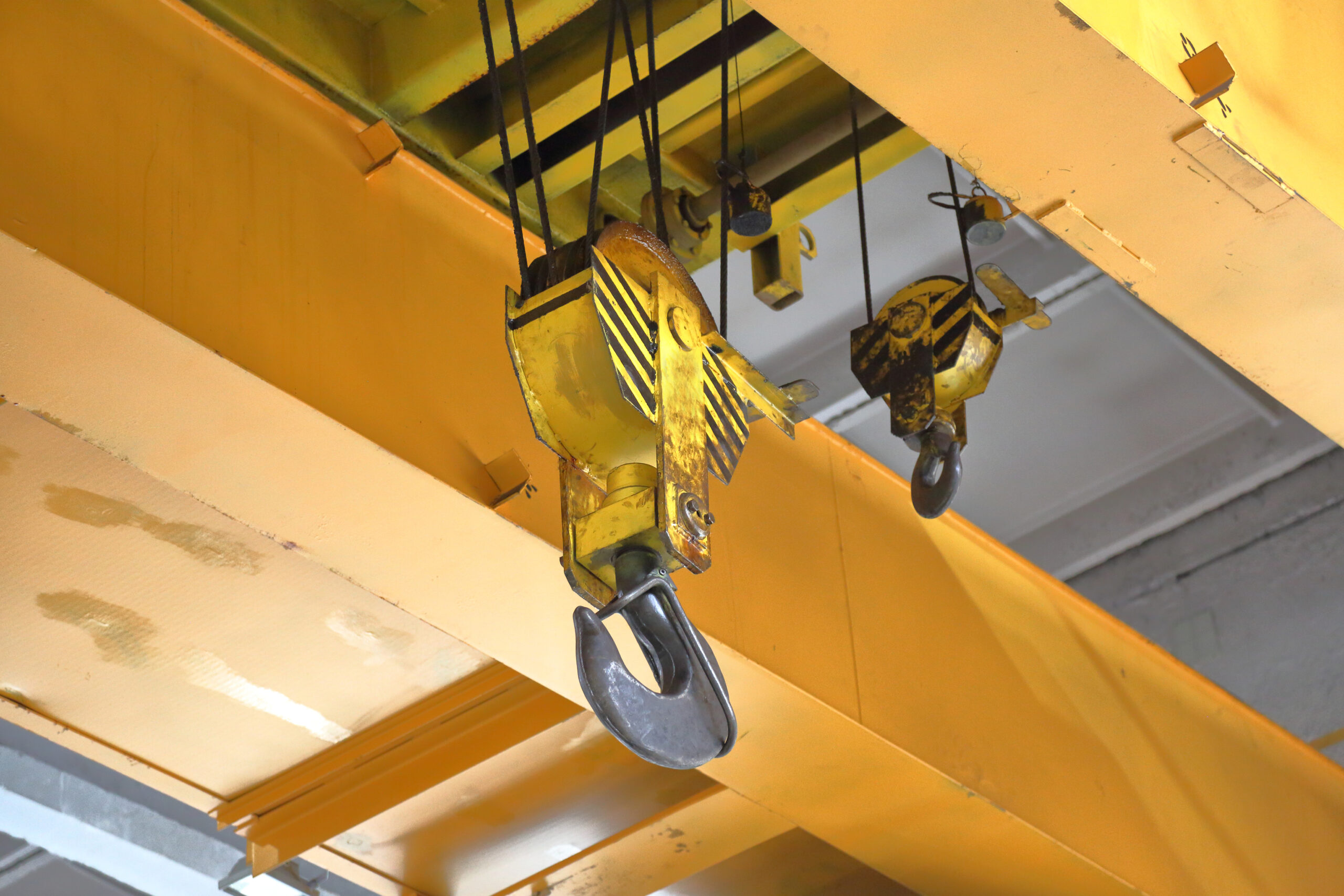
A double girder crane uses two parallel bridge beams that span the width of the bay. The hoist and trolley operate between or on top of the two girders, depending on the crane configuration. That extra girder structure supports greater load capacities and stands up to demanding operating conditions.
Facilities involved in heavy manufacturing, steel handling, industrial production, and large material loads rely on this design for its strength and stability. A double girder overhead crane can also provide greater lifting heights and longer spans, since the top-running trolley raises the load higher within the same building. Steel mills, foundries, and heavy fabrication shops generally favor this configuration.
Single Girder vs. Double Girder Cranes: Key Differences
When you compare a single girder vs double girder overhead crane, the core distinction comes down to how the bridge is constructed. That structural difference drives nearly every performance and cost factor that follows.
- Load Capacity: Two beams share the load, so a double girder system carries far more weight. The single girder system suits lighter and moderate loads.
- Span: Facility width and required crane coverage guide the choice. Wider bays push a single beam past its practical limit, favoring a two-beam design.
- Lifting Height: A top-running trolley raises the hook higher within the same roof, while an underhung hoist sits lower and reduces maximum lift height.
- Duty Cycle: Light and moderate schedules pair well with a single girder crane. Heavy, high-frequency use favors a double girder build.
- Installation and Operating Costs: More steel and greater structural demand increase purchase price and the installation effort for a double girder system.
- Maintenance: Many double girder cranes accommodate a service walkway, giving technicians safe access for inspections. Single girder systems keep components lower and simpler.
- Available Space: Building height and headroom shape the decision, since each design occupies vertical clearance differently.
Keep Your Cranes Compliant and Your Crew Safe.
When Should You Choose a Single Girder Crane?
A single girder crane is often the practical, cost-conscious choice when your needs are straightforward. It may be right for you if you have:
- Light to moderate lifting requirements
- Facilities that do not require very high lifting capacities
- Lifting applications with moderate duty cycles
- Operations where initial equipment cost carries weight
- Facilities with limited headroom or structural constraints
- Warehouses, workshops, and manufacturing bays with moderate coverage needs
You’ll commonly find these overhead cranes in warehouses, workshops, manufacturing facilities, and general material handling. The benefits of a single girder crane include a lighter structure, lower cost, and an easier fit in tighter spaces. Just remember that a single-girder crane’s capacity is typically lower than that of a double girder, so confirm your heaviest lift fits before you decide.
When Should You Choose a Double Girder Crane?
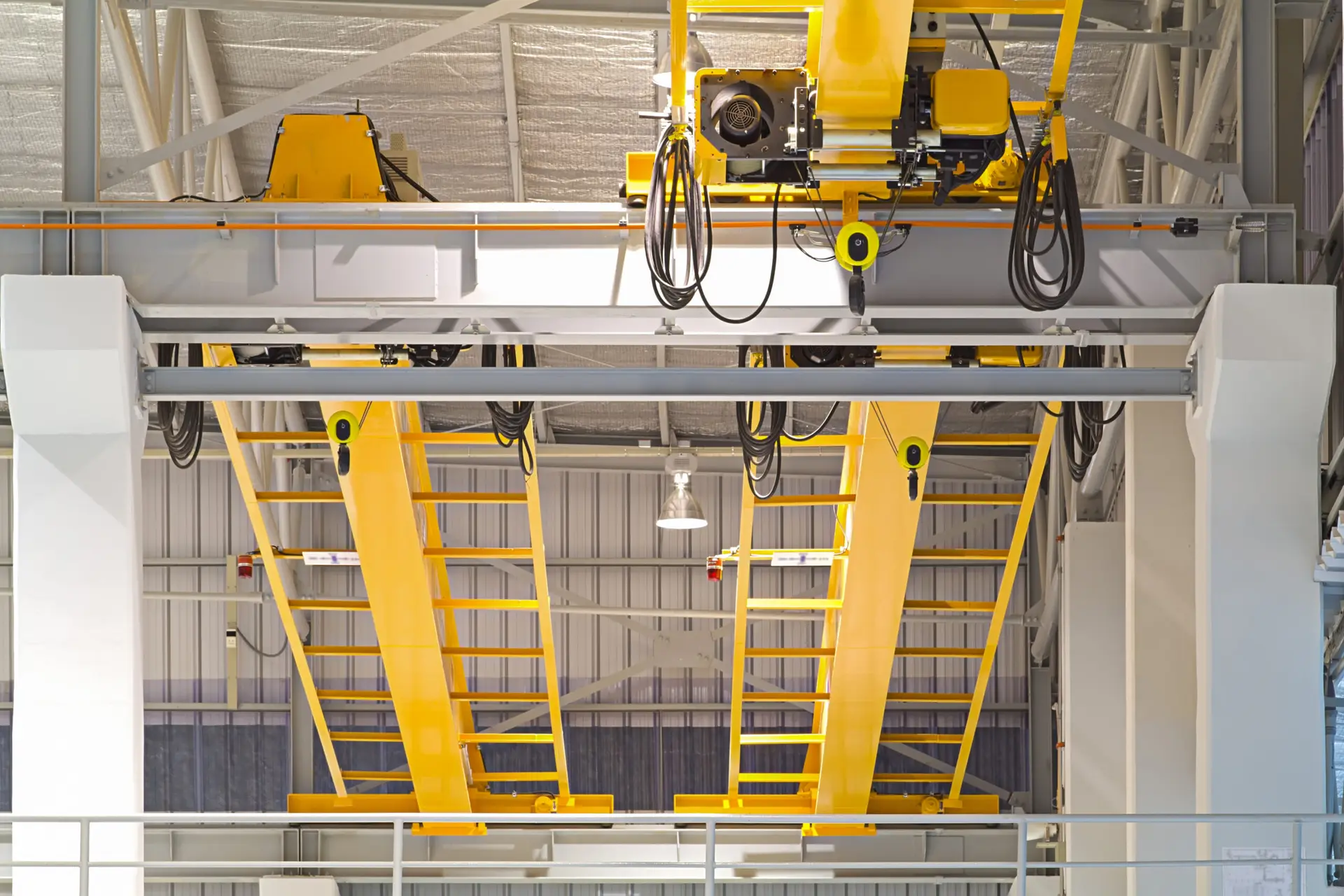
A double girder crane is often the stronger, more capable choice when your operation goes past everyday lifting. It may be right for you if you have:
- Heavy or high-capacity lifting requirements
- Facilities that demand higher lifting capacities than a single beam allows
- Wide bays and long spans that need added structural rigidity
- Applications calling for greater lifting heights and maximum hook clearance
- Heavy, high-frequency duty cycles and near-continuous operation
- Steel mills, foundries, heavy fabrication shops, and industrial production settings
Heavy manufacturing, steel handling, and large material-handling operations usually rely on double girder cranes. The most noted benefits of a double girder crane include greater load capacity, longer achievable spans, higher hook heights, and walkway access that makes inspections safer. However, the extra steel and structure increase your upfront purchase and installation cost. So, confirm the added capability matches your workload before you decide.
Fast, Reliable Repairs When You Need Them Most.
Single Girder or Double Girder: Which One Is Right for You?
When it comes to single girder or double girder crane decisions, there’s no one-size-fits-all answer, so the real question is which one is right for you. Here’s a quick comparison to see how the two stack up at a glance:
| Factor | Single Girder Crane | Double Girder Crane |
|---|---|---|
| Load capacity | Moderate | Heavy to very heavy |
| Span | Standard | Long |
| Lifting height | Standard | Greater hook clearance |
| Duty cycle | Light to moderate | High-frequency, demanding |
| Cost | More budget-friendly | Higher investment |
| Best for | Everyday lifting, tight spaces | Heavy industry, tough conditions |
As the table shows, your decision hinges on how demanding your workload is and how much room and budget you’re working with. Neither option is universally better. The right fit comes down to your facility layout and specific material-handling needs, which is what smart overhead crane selection is all about.
Whichever option you choose, OSHA’s overhead crane standard 1910.179 requires frequent and periodic inspections. So, before you commit, have your application professionally evaluated. Understand whether you truly need it and what the maintenance and compliance requirements will be.
A qualified expert, like Brennan Jacobs, can look at your loads, layout, and schedule and help you avoid an expensive mismatch. Our team will also help you keep your overhead crane in excellent shape through regular inspections and maintenance services.
Final Thoughts: Match the Overhead Crane Type to Your Workload
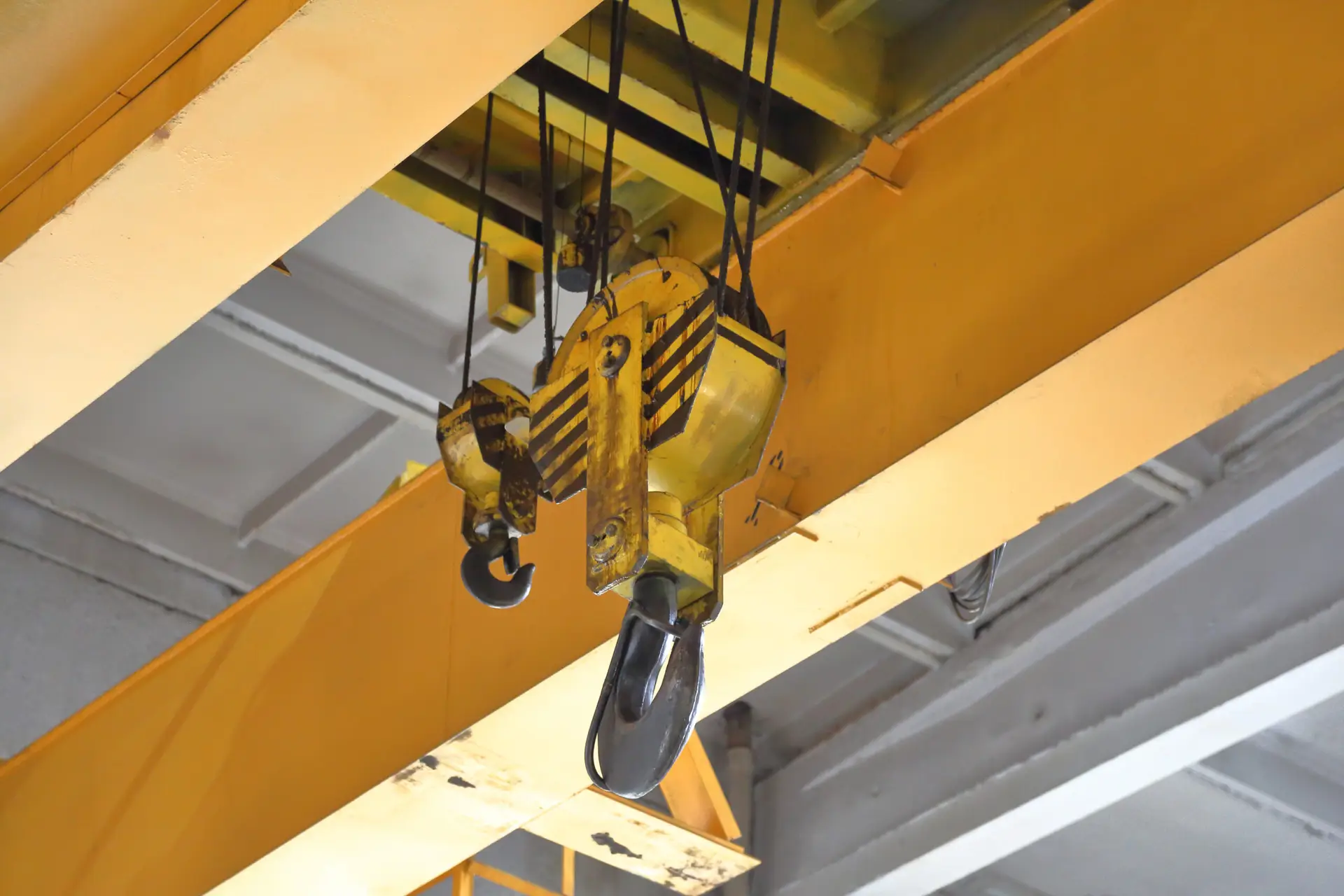
Your choice between a single girder and a double girder overhead crane is determined by factors like loads, spans, lift height, and how hard you push the equipment each day. Single girder systems reward lighter, shorter-span operations with lower cost and a simpler structure. Double girder systems are perfect for heavy, wide-span, high-duty facilities with greater capacity and added hook height.
Getting the sizing, installation, and inspection program right is what protects your uptime and your people for the long haul. If you want help selecting, installing, and maintaining the crane that fits your facility, the team at Brennan Jacobs brings decades of hands-on field experience to every project. We also provide overhead crane and hoist inspection services, repairs, and part sourcing.
Contact us today to schedule an on-site evaluation of your facility.
Quality Crane & Hoist Parts Ready to Ship.
Frequently Asked Questions (FAQs)
A single girder crane runs on one bridge beam with the hoist mounted underneath, while a double girder crane uses two beams with the hoist riding on top. That extra beam gives double girder cranes more strength, higher hook heights, and greater capacity.
Yes, in most cases, a single girder crane costs less. It uses less steel, has a simpler structure, and is quicker to install, which keeps both your upfront and installation costs down.
For heavy lifting, a double girder crane is the stronger pick. Its twin-beam design handles bigger loads, longer spans, and demanding duty cycles far better than a single girder setup.
A single girder overhead crane typically handles loads up to around 20 tons, though it depends on the span and design. Once you go beyond that, a double girder configuration usually makes more sense.
Reach for a double girder overhead crane when you need heavy lifting, longer spans, greater hook heights, or high-frequency operation. It’s the go-to for heavy manufacturing, steel handling, and tough industrial settings.
Yes, a double girder crane generally needs more overhead space because of its taller structure. The upside is you gain better hook height and lifting clearance in return.
Start with your load capacity, span, lift height, and duty cycle, then weigh your budget and available space. The right fit depends on your facility, so it’s smart to have your application professionally evaluated first.
Key factors in overhead crane selection include load capacity, span, lift height, duty cycle, available headroom, operating environment, and budget. Balancing these together points you toward the crane that truly fits the job.
Author:
Victor Crawford is the President and CFO of Brennan Jacobs Inc., a company he founded in 2010. He has 42 years of industrial machine maintenance experience, including 30 years focused on overhead cranes and hoists. Before starting his own company, he worked at Konecranes for many years, earning the title of Master Technician and later working as a salesman and Branch Manager, opening offices in Plant City, Miami, Jacksonville, Memphis, Little Rock, and Nashville. He holds a degree in Industrial Controls Engineering from Tampa Technical Institute and is a Journeyman Millwright.